Understanding Hydroplaning, Tire Maintenance, and When to Rotate, Replace, or Inflate Tires for Maximum Safety on Wet Roads
Introduction: Understanding the Importance of Hydroplaning Prevention Hayward
Rainy weather conditions cause thousands of preventable accidents each year, especially in urban regions where traffic volume, aging roadways, and unpredictable microclimates intersect. That’s why hydroplaning prevention Hayward is not simply a driving skill but a critical form of vehicle maintenance and preparedness for anyone who commutes through the East Bay.
Whether you drive along Mission Blvd, I-880, I-580, Foothill Blvd, or the San Mateo Bridge, your safety largely depends on your tires’ ability to maintain traction on wet pavement. This blog explores the physics of hydroplaning, the environmental conditions that affect it, and the essential role of tire inflation, rotation, and replacement in managing hydroplaning prevention Hayward for daily drivers.
Our goal is to blend academic-level research with practical roadside knowledge so every driver—from new motorists to long-distance commuters—can improve their mastery of hydroplaning prevention Hayward through smart tire care.
What Hydroplaning Really Is and Why Hydroplaning Prevention Matters
Defining Hydroplaning Through Physics
Hydroplaning occurs when water pressure builds under your tires faster than your tread can disperse it. Once that pressure lifts the tire from the pavement, traction plummets. Drivers lose steering control, braking ability, and vehicle stability. This is the foundational reason hydroplaning prevention is essential for both safety and vehicle performance.
The Mechanics Behind Water Displacement and Traction Loss
Modern tire tread patterns are engineered with grooves designed to channel water away. When tread depth falls below 4/32″, water evacuation slows dramatically, making hydroplaning more likely even at modest speeds. As tread depth decreases further, hydroplaning prevention becomes increasingly difficult for any vehicle—even those with advanced stability control systems.
Academic studies from Harvard and MIT show that aquaplaning begins when hydrodynamic lift exceeds gravitational downward force and tire friction. This event is more easily triggered when tires are underinflated, worn out, or mismatched, further emphasizing why hydroplaning prevention starts with proper tire maintenance.
Bay Area Microclimates and Their Impact on Hydroplaning Prevention
The East Bay Rainfall Pattern
Unlike regions with predictable seasonal rains, Hayward and surrounding Bay Area cities experience inconsistent precipitation. Long dry periods cause road oils to accumulate, and the first rainfall mixes oil and water into slick film—one of the key environmental contributors to reduced traction and compromised hydroplaning prevention .
Roadway Design and Standing Water Zones
Drivers frequently encounter water pooling in known locations:
Hesperian Blvd near Industrial Parkway
Whipple Road underpasses
Northbound I-880 left lanes near Union City
Sections of Mission Blvd near the Hayward BART corridor
These areas are notorious for road surface irregularities and slow drainage, making awareness of hydroplaning prevention Hayward vital for regular commuters.
Tire Inflation and Its Role in Hydroplaning Prevention Hayward
Why Correct Tire Pressure Matters
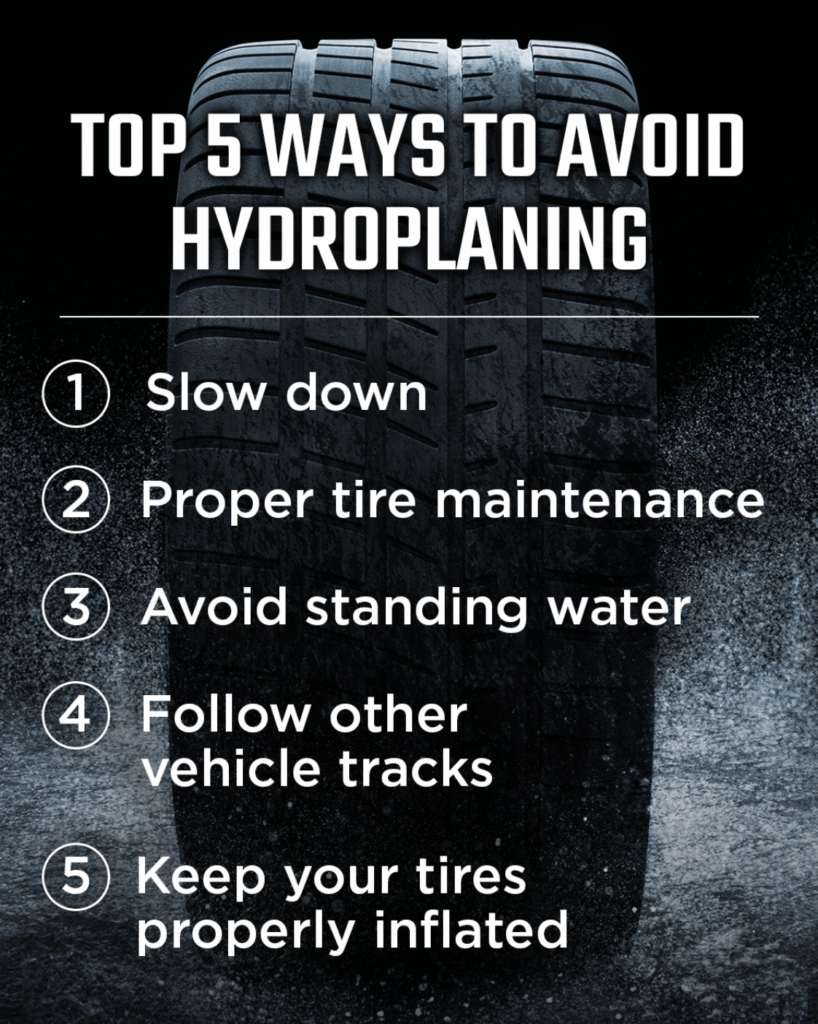
Proper tire inflation maintains structural integrity, optimizes tread contact, and ensures water can be evacuated effectively. Underinflation causes the tread surface to collapse, reducing hydroplaning resistance. Overinflation stiffens tires, reducing road grip. For optimal hydroplaning prevention Hayward, drivers must maintain manufacturer-recommended PSI levels.
Seasonal Temperature Shifts and PSI Loss
With every 10°F temperature drop, tires lose approximately 1 PSI. Mornings in Hayward often start cool and warm rapidly in the afternoon. These fluctuations mean residents need to check tire PSI regularly to sustain hydroplaning prevention Hayward during unpredictable weather patterns.
Tread Depth, Wear Patterns, and Tire Replacement for Hydroplaning Prevention Hayward
Minimum Requirements vs. Safe Standards
California’s legal minimum tread depth is 2/32”. But expert studies show that hydroplaning risk dramatically increases before this point. For effective hydroplaning prevention Hayward, recommended tread depth minimums are:
4/32″ for wet-weather safety
6/32″ for winter or high-moisture conditions
Uneven Wear and Alignment’s Influence
Misaligned wheels cause uneven tread wear, limiting water dispersal and reducing hydroplaning prevention Hayward effectiveness. Common symptoms include:
Inner-edge baldness
Feathering or cupping
Steering pull
Routine alignment checks dramatically increase traction reliability.
Tire Rotation Frequency and Its Impact on Hydroplaning Prevention Hayward
Why Regular Rotation Matters
Tires wear unevenly depending on vehicle weight distribution, turning patterns, and driving habits. Consistent rotation prevents premature tread degradation and improves hydroplaning prevention Hayward across all tire positions.
The typical rotation interval is 5,000–7,000 miles, which conveniently aligns with oil change schedules.
Driving Techniques That Support Hydroplaning Prevention Hayward
Even with properly maintained tires, safety-conscious driving strategies are essential.
Reduce Speed in Wet Weather
Hydroplaning can occur at speeds as low as 35 mph if tread is shallow, further reinforcing the need for holistic hydroplaning prevention Hayward practices.
Avoid Sudden Movements
Abrupt braking or sharp steering increases the chance of losing control.
Follow the Water-Cleared Path
The tire tracks of vehicles ahead naturally reduce water depth, enhancing hydroplaning prevention Hayward for your own vehicle.
The Modern Vehicle Challenge in Hydroplaning Prevention Hayward
Electric vehicles and heavier SUVs place more downward weight on tires, increasing wear rates. Their added weight affects tire longevity, which means EV ownership requires more frequent monitoring for hydroplaning prevention Hayward to remain effective.
How Big O Tires Hayward Supports Hydroplaning Prevention Hayward
Free Tire Evaluations
Our technicians assess:
Tread depth
PSI accuracy
Wear patterns
These evaluations are essential components of hydroplaning prevention Hayward for daily commuters.
Seasonal Promotions That Improve Road Safety
Current offers include:
Buy 3 Sailun Tires, Get 1 Free
Free Brake Inspection + $100 Off per axle
Free Alignment Check + $99.99 Alignment
Premium Synthetic Oil Packages with Free 4-Tire Rotation
Each service contributes to improved traction, control, and hydroplaning prevention Hayward.
Making Hydroplaning Prevention Hayward Part of Your Driving Routine
Hydroplaning is not an inevitable hazard. With proper tire inflation, timely replacement, routine rotation, accurate alignment, and safe driving strategies, every Bay Area driver can dramatically enhance hydroplaning prevention Hayward outcomes.
From Mission Blvd to Hesperian Blvd, from downtown Hayward to Union City and Fremont, being proactive with tire care is one of the most powerful safety decisions a driver can make.
Take Charge of Your Hydroplaning Prevention Hayward Today
For expert tire maintenance, tread evaluation, alignment services, and seasonal safety checks, visit:
📍 Big O Tires Hayward
22484 Mission Blvd, Hayward, CA 94541
📞 (510) 925-4098
Your safety matters. Your traction matters. And hydroplaning prevention Hayward begins with the right tire care—today.
Find us on Google or get directions to our store today.